Mastering Professional Headshot Poses Female Leaders Use
Long before anyone reads your bio or your resume, they see your headshot. It’s your first impression, your digital handshake, and it’s doing a lot of the heavy lifting for your personal brand. This isn't just about having a nice photo; it's about using a strategic asset to communicate confidence, competence, and approachability in a single, powerful glance.
That’s why getting the right poses for a professional female headshot is so crucial—it tells your story visually.
Your Headshot Is Your Digital Handshake
Forget the stiff shoulders and the forced, awkward smiles. This guide is about showing you how simple, subtle shifts in your posture and expression can transform your photo from just "okay" to truly authentic and authoritative. This is especially true on platforms like LinkedIn, where that first impression is everything. You don't need to be a model; you just need to master a few key techniques to look like your best, most confident self.
Think of a strong headshot as a long-term investment in your career. A 2023 study found that 50.26% of LinkedIn users kept the same profile photo for three to six years, or even longer. It’s a lasting piece of your brand identity. Interestingly, the study also found that women tend to update their photos more often than men. You can dig into more of these LinkedIn photo trends here.
The longevity of a great headshot makes getting the pose right the first time so important. It’s your visual introduction, and it works for you around the clock, on every platform.
Your headshot is often the first point of contact a recruiter, client, or colleague has with you. A confident, professional pose ensures that this first impression is a powerful one.
We’re going to focus on practical, actionable advice that creates natural-looking results. Plus, I'll show you how modern tools can help you achieve that polished, high-end look without the hassle and expense of a traditional photoshoot, putting you in complete control of your professional image.
Nailing the Three Foundational Poses
Ready to move from theory to practice? While the world of posing is vast, most powerful headshots for professional women are built on three foundational stances. Once you master these, you’ll have a versatile toolkit that you can adapt for any context, from your LinkedIn profile to a speaker bio.
The Subtle Angle
Standing straight-on to the camera can feel a bit like a passport photo—flat and sometimes even confrontational. The easiest way to add instant dimension and warmth is to introduce a simple angle.
Turn your body slightly away from the camera, anywhere from a 10 to 45-degree angle, so one shoulder is naturally closer to the lens than the other. Keep your head turned towards the camera. This small shift is universally flattering; it creates a more dynamic shape and makes the entire image more engaging and approachable.
This infographic shows how modern headshot solutions are evolving, blending technology with traditional photography techniques to meet today's professional demands.
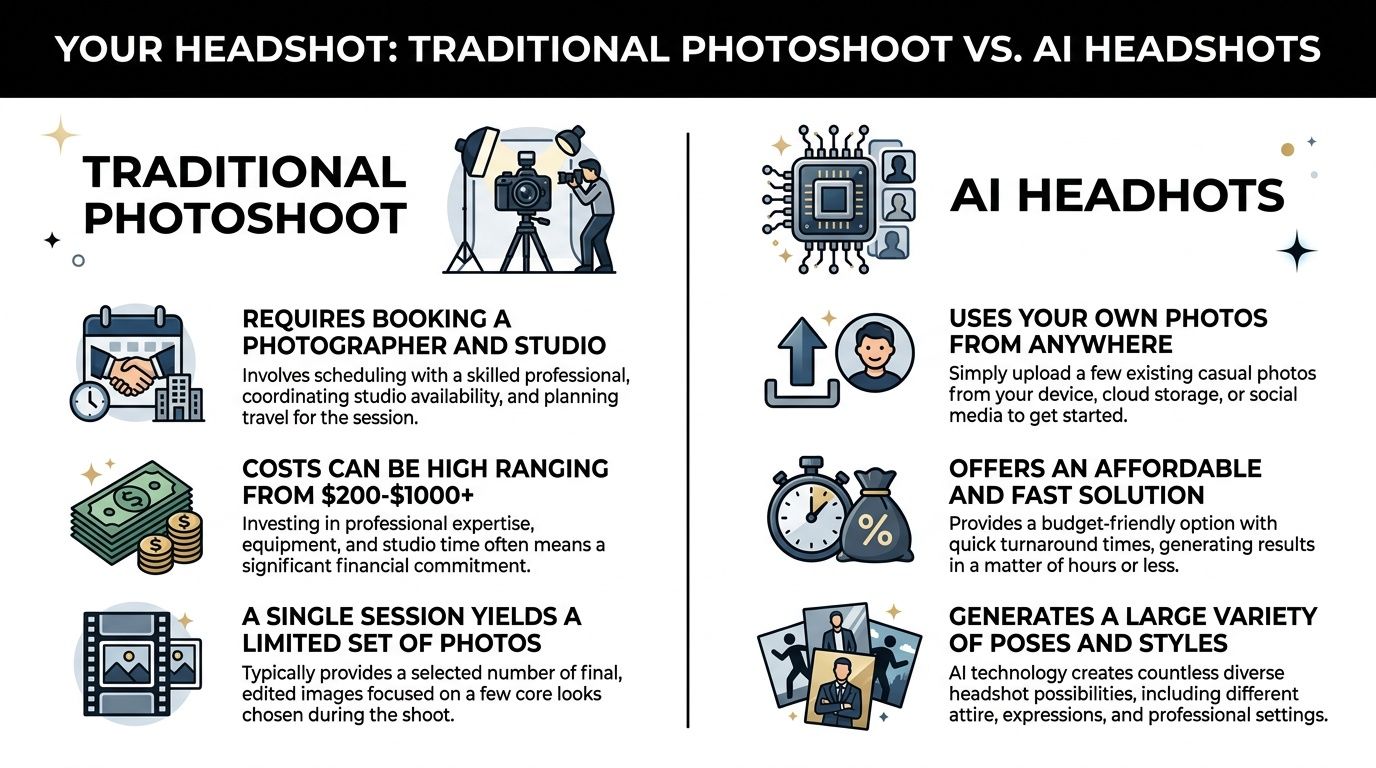
As you can see, professionals now want more flexibility and variety than a single, traditional photoshoot can often provide.
The Confident Lean
Another go-to move for creating an instant connection is a slight lean-in. By leaning gently toward the camera from your hips, you break the static two-dimensional plane and send a powerful non-verbal cue. It says, "I'm engaged, confident, and ready to connect."
The trick here is to maintain great posture. Keep your back straight as you lean. A great mental cue is to imagine a string gently pulling the crown of your head toward the ceiling while you incline your torso forward. This prevents you from accidentally jutting your chin out.
Pro Tip: The magic really happens when you combine the lean with the subtle angle. Turning your body slightly and then leaning in creates a look that is both slimming and incredibly engaging—a winning formula for almost any professional platform.
The Classic Power Stance
A power stance is all about projecting quiet authority and self-assurance, and it’s usually communicated through your arms. While there are many variations, two are particularly effective for headshots.
- Crossed Arms: This classic pose signals expertise and confidence. The key is to keep it relaxed. Don't clench your fists or pull your arms in too tightly, which can read as defensive. Just let them rest naturally across your body.
- Hand on Hip: Placing one hand on your hip creates a strong, asymmetrical line that conveys both control and readiness. It's a fantastic way to define your waist and add a touch of assertiveness to your look.
No matter which pose you choose, remember this one critical tip: push your chin slightly forward and then down. It feels a little unnatural at first, but it works wonders on camera to define your jawline. For even more inspiration, you can explore our detailed guide on the best headshot poses for men and women.
To help you remember these core poses, here’s a quick summary of when and why to use them.
Quick Guide to Foundational Poses
| Pose Name | Key Action | Best For Conveying | Where to Use It |
|---|---|---|---|
| The Subtle Angle | Turn body 10-45 degrees from the camera | Approachability, warmth, and dimension | LinkedIn, company websites, general professional profiles |
| The Confident Lean | Incline torso slightly toward the camera | Engagement, confidence, and trust | Speaker bios, personal branding websites, email signatures |
| The Power Stance | Cross arms loosely or place one hand on a hip | Authority, expertise, and self-assurance | Author photos, executive leadership pages, conference materials |
Think of these three poses not as rigid rules, but as a reliable starting point. Practice them in the mirror, see how they feel, and you’ll walk into your next headshot session feeling prepared and confident.
Let Your Personality Shine Through Your Expression
Even the most flattering pose can fall flat if your expression doesn't connect. The real goal is to move past that generic "cheese!" and capture a look that feels genuinely you—confident, professional, and engaging.
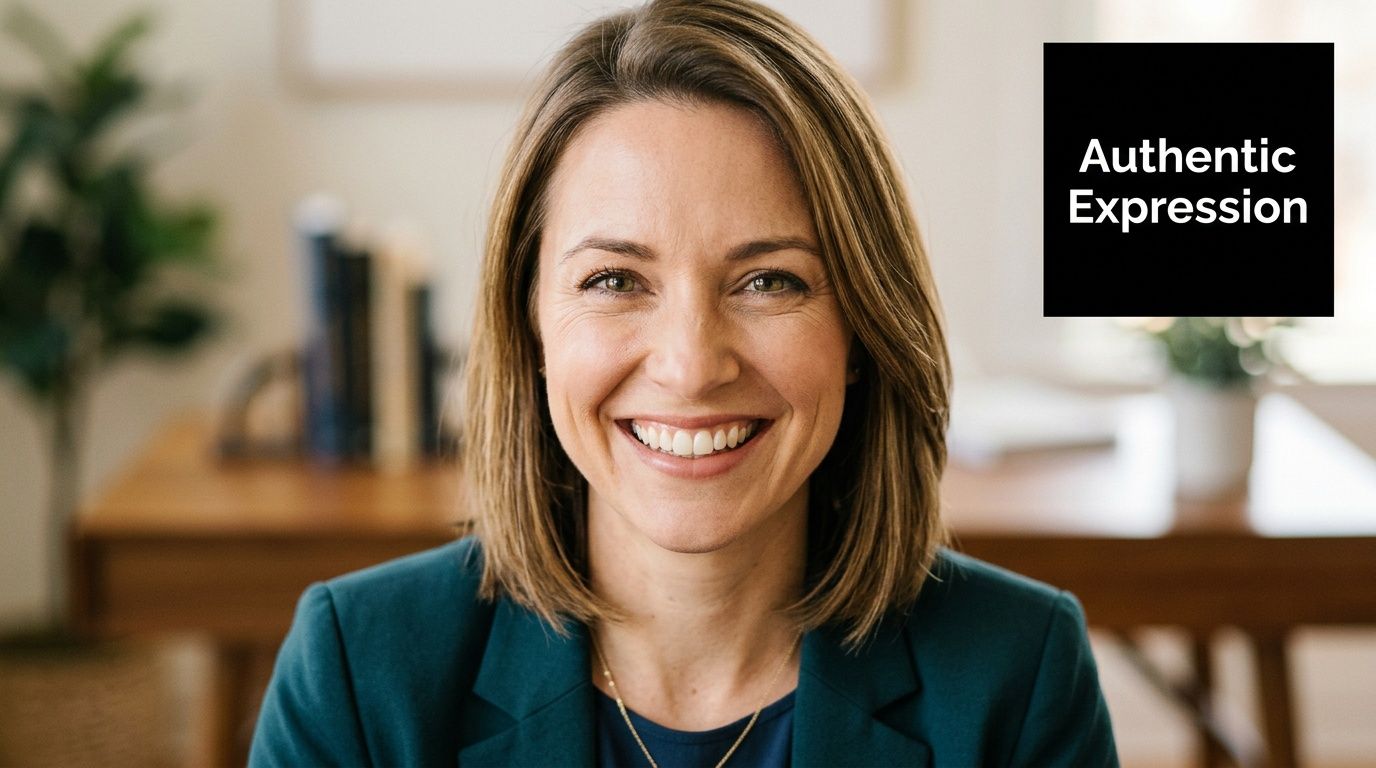
Think about the story your headshot should tell. If you work in a creative or collaborative field, a big, open smile is fantastic for radiating warmth and approachability. On the other hand, if you're in a more formal industry like law or finance, a subtle, closed-mouth smile can project authority and quiet confidence. Both are powerful, just for different contexts.
The Secret to a Smile That Reaches Your Eyes
We've all heard it, but it’s true: the secret to a genuine smile isn't in your mouth—it’s in your eyes. This is the "smize," or smiling with your eyes, and it’s achieved by just slightly squinting your lower eyelids. This tiny adjustment completely transforms a standard smile into one that feels authentic and sincere.
Here’s a great trick to try right before the shutter clicks: think of something that genuinely makes you happy. It could be a recent professional win, a funny memory, or even just your favorite pet. This simple mental cue brings real emotion to your face, helping you avoid that stiff, "corporate robot" look we all dread.
This shift toward more open, authentic expressions is more than just a feeling; it’s a trend. An analysis of 2,000 LinkedIn profiles found that a huge 76% of people were smiling broadly. This shows that professionals are increasingly communicating competence through approachability rather than strict formality. You can dig into the data and see more about how professionals present themselves online in the full analysis.
Key Takeaway: Your expression is the heart of your headshot. Whether it's big and welcoming or subtle and assured, it needs to feel authentic to you and right for your industry.
Remember to practice a few expressions in the mirror. It might feel silly at first, but it will help you discover what feels most natural and confident for you.
Nailing Your Look: Wardrobe and Hairstyle Tips
You've practiced your angles and expressions, but let's not forget the final pieces of the puzzle: your wardrobe and hair. These aren't just afterthoughts; they're crucial elements that frame your face and communicate your professional brand. When everything works in harmony, your confidence shines through.
The key is to aim for a timeless, polished look that feels authentic to you.
Choosing an Outfit That Flatters
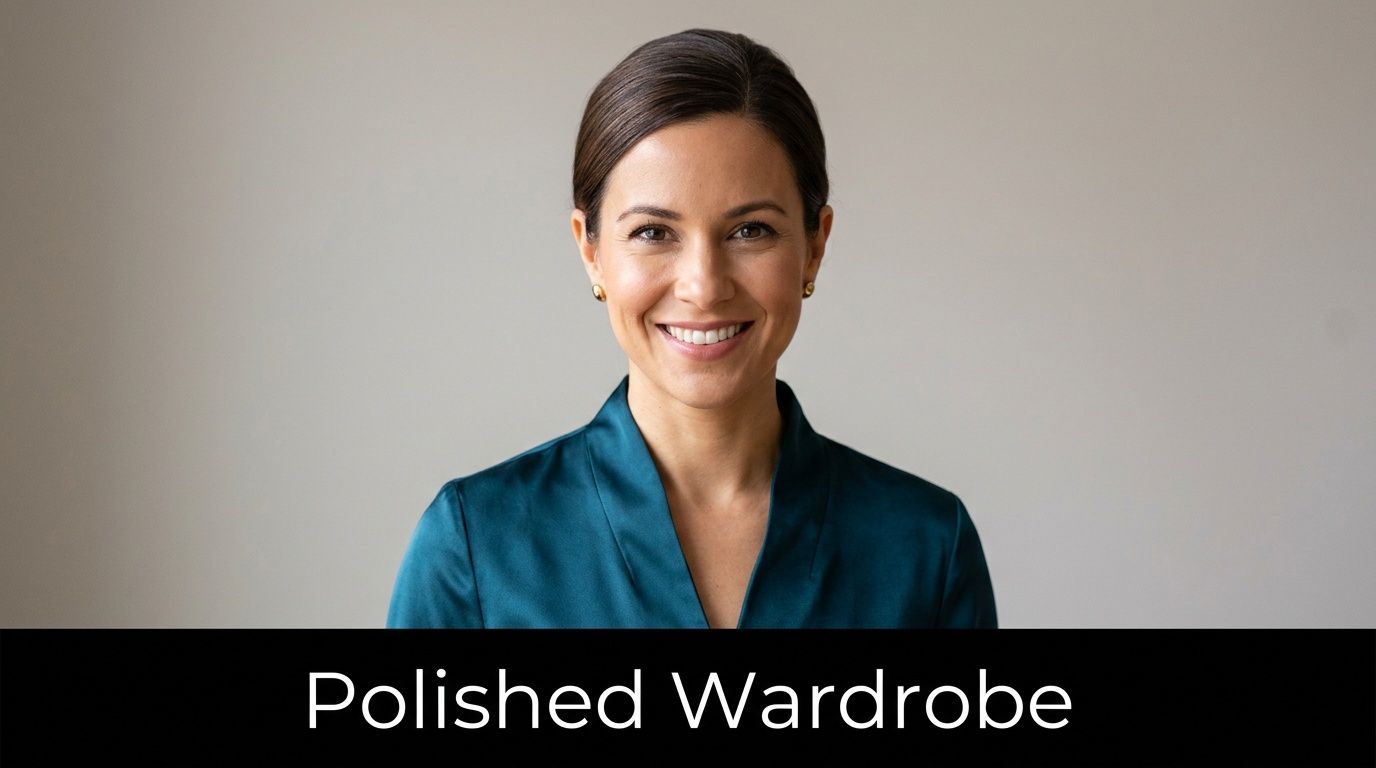
When it comes to your wardrobe, think about structure, fit, and color. A well-fitting blazer or a structured blouse is an absolute classic for a reason—it instantly adds a layer of professionalism. I can't stress this enough: fit is everything. An outfit that pulls or bunches can distract from even the most perfect professional headshot poses for a female.
Your neckline also plays a big role in framing your face. Here are a couple of go-to options:
- V-necks and scoop necks are fantastic because they naturally elongate your neck and draw the viewer's eye upward.
- A classic button-up shirt or blouse gives off an air of authority, especially layered under a blazer.
For color, it’s usually best to stick with solids. Rich jewel tones—think sapphire blue, emerald green, or a deep ruby red—photograph beautifully and help you stand out from the background. Busy patterns can be distracting, pulling focus away from your expression.
For a deeper dive into picking the perfect outfit, check out our complete guide on how to dress for a professional headshot.
Here's my golden rule: if you don't feel comfortable and confident in what you're wearing, it will show on camera. Your posture will slump, and your smile will look forced. Choose something that makes you feel like the best version of yourself.
Polishing Your Hairstyle
Your hair should look neat, polished, and intentional. The main goal is simple: make sure it isn't hiding your face! Whether you’re wearing it down, styled in an elegant updo, or showing off your gorgeous natural curls, it should frame your features, not obscure them.
One of the biggest mistakes I see is people trying a brand-new, dramatic haircut or style the day before their shoot. Stick with a look you know and love—one that makes you feel confident. Your hairstyle is a core part of your professional identity, so it should feel like you.
Get Studio-Quality Results with AI Headshots
Now that you know how to pose like a pro, you don’t necessarily need to book an expensive photoshoot to put that knowledge to use. You can get incredible results by taking a few simple photos yourself—even a well-lit selfie against a plain wall is a great starting point.
This is where a tool like FlowHeadshots comes in. It takes those well-posed source photos and transforms them into a full portfolio of professional portraits. The AI handles all the technical details, like perfecting the lighting, swapping in a clean studio background, and even dressing you in a sharp business suit or blouse.
Your Pose, Polished by AI
The beauty of this approach is that you maintain complete control over the most important parts of your headshot: your expression and your pose. You don't have to stress about finding the perfect studio or mastering complex lighting setups. Just focus on looking confident and authentic.
Think of it as a fast, modern way to generate a whole gallery of headshots you can use everywhere—from your LinkedIn profile to your company's website.
The final images are yours to keep, and they genuinely reflect the professional image you want to project. To see how it works, you can learn more about getting the most out of an AI headshot generator in our guide. By combining what you’ve learned about posing with this technology, you can build a library of polished, consistent images ready for any opportunity that comes your way.
Answering Your Top Headshot Posing Questions
Even with the best preparation, a few common worries tend to creep in right before the camera starts clicking. These are the questions I hear all the time, so let's get them answered so you can walk into your session feeling totally confident.
What Should I Do with My Hands?
For a classic, tight headshot, this is a non-issue—your hands won't even be in the picture. But for a slightly wider shot that captures more of your upper body, what you do with your hands makes a huge difference. The key is to give them a job.
Letting them hang awkwardly at your sides can make you look stiff. Instead, try gently crossing your arms for a look of confident ease, or place one hand on your hip to convey a bit more authority. Just make sure your hands stay relaxed, never clenched into a fist.
How Can I Avoid a Double Chin in Photos?
Ah, the age-old question! There's a fantastic photographer's trick for this that works on everyone.
Think like a turtle. Gently push your forehead and chin forward, just a bit, and then slightly tilt your chin down.
It feels incredibly awkward and unnatural in the moment, I know. But on camera, this one little move does wonders. It defines your jawline, elongates your neck, and is probably the single most effective posing tweak you can make.
Is It Better to Stand or Sit?
My vote is almost always for standing. When you stand, you naturally engage your core and it’s easier to pull your shoulders back and down, creating a much stronger and more dynamic posture.
If a shot requires you to be seated, don’t just lean back and get comfortable. Perch right on the edge of the chair or stool and lean slightly toward the camera. This forces you to maintain that same engaged, energetic presence you have when standing, preventing any hint of slouching.
Ready to create dozens of perfect poses without a single photoshoot? FlowHeadshots uses your own photos to generate a huge variety of studio-quality headshots in minutes. Get started with FlowHeadshots today.
Enjoyed this article? Share it with your network.
Ready to get your AI headshots?
Professional photos in 60 seconds. No photoshoot required.
Get Started Free