Headshots and Resumes a Modern Professional Guide
For most job seekers in the U.S., UK, and Canada, the big question is whether to put a headshot on their resume. The short answer? Don't do it. A clean, photo-free resume focused squarely on your skills and experience is still the gold standard.
Instead, the smarter play is to make a great professional headshot the centerpiece of your online presence on platforms like LinkedIn.
Why Your Headshot and Resume Should Be Separate
Think of it this way: your resume is the technical blueprint of your career. It’s built for recruiters and the automated software they use to scan applications. Its only job is to lay out your qualifications, skills, and work history as clearly as possible. A photo just gets in the way of that mission.
Your professional headshot, on the other hand, is your digital handshake. It’s perfect for places where personal connection and branding matter—like LinkedIn, your personal website, or company bio pages. In those spaces, a photo helps build trust, shows a bit of your personality, and makes you far more memorable. Keeping them separate lets each tool do its job perfectly.
The Real Risk of Unconscious Bias
The biggest reason to keep your photo off your resume is to sidestep unconscious bias. A picture immediately reveals details like your age, gender, and ethnicity before a hiring manager even reads the first bullet point about your accomplishments. This can unintentionally shift their focus from what you can do to a subjective first impression.
The data backs this up. One career analysis found that resumes without photos are 40% more likely to get past the initial screening in the U.S. and the U.K. On top of that, nearly 90% of Fortune 500 companies use applicant tracking systems (ATS) that can’t properly process images. Adding a photo could get your resume automatically rejected before a human ever lays eyes on it.
Your resume proves you have the skills to get through the door. Your headshot, used correctly on professional networks, makes people want to invite you in. They're a powerful duo, but only when used in the right places.
Strategically separating these two assets ensures your application is judged purely on merit. Learn more about how a professional headshot for your resume works best on other platforms in our detailed guide. This approach respects the realities of modern hiring and gives you the best possible shot at landing an interview.
Why Your LinkedIn Profile Is Incomplete Without a Headshot
Let's be clear: your resume and your LinkedIn profile do two completely different jobs. A resume is a text-only document, often stripped down by screening software. But LinkedIn? That's your professional living room—a place for networking, building your brand, and making real connections.
Showing up on LinkedIn without a photo is like going to a networking event and refusing to make eye contact. You're technically there, but you're not really participating. People connect with people, not just with a list of qualifications.
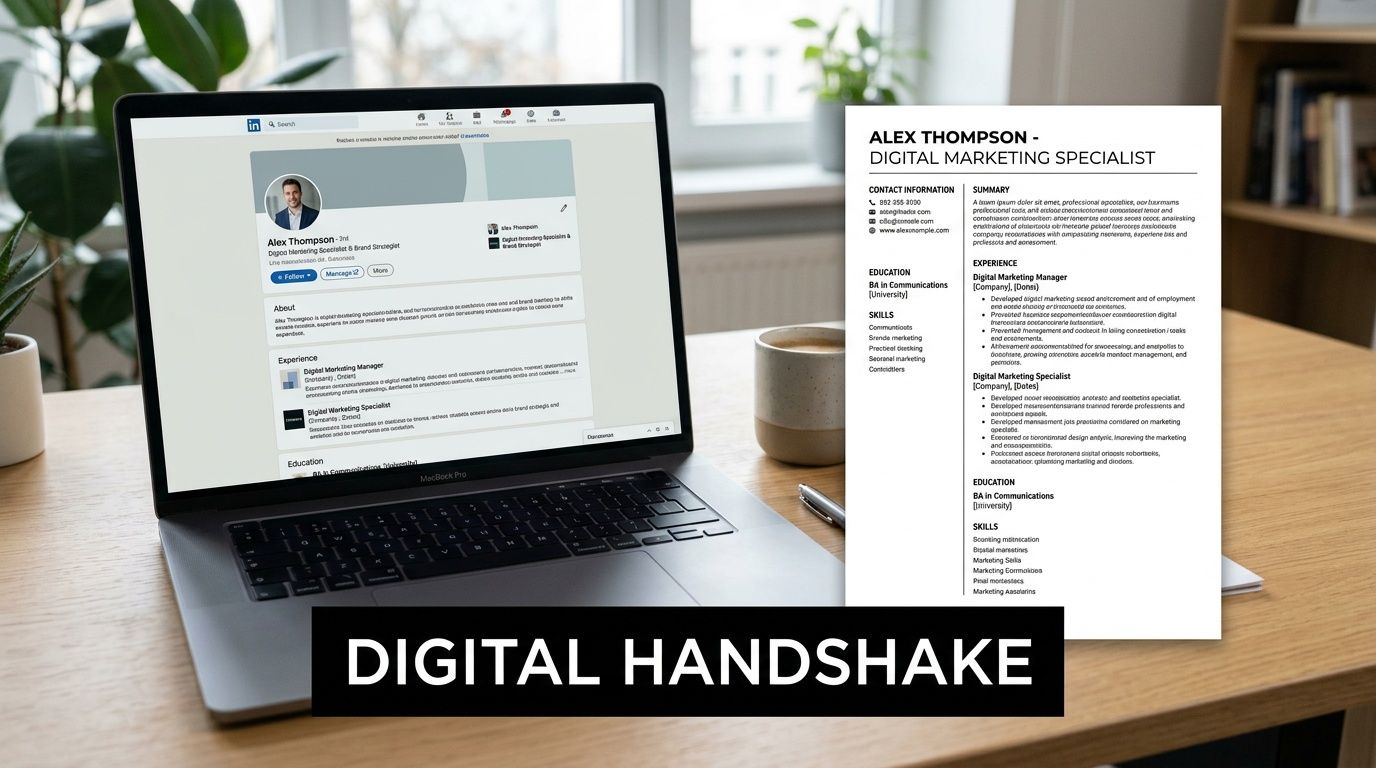
A professional headshot is your digital handshake. It’s the very first thing that builds trust and makes you seem approachable, long before you ever send a message. Think about it—who are you more likely to connect with? A gray, default silhouette or a person with a warm, confident smile? The choice is pretty obvious.
The Hard Numbers Behind a Great Photo
This isn't just a gut feeling; the data backs it up completely. Having a professional headshot dramatically boosts how visible you are on platforms like LinkedIn.
Industry stats show that LinkedIn profiles with a photo get 21x more views, 9x more connection requests, and a staggering 36x more messages than those without one.
These numbers prove a headshot isn't just a nice-to-have; it's a core part of your professional toolkit. The standard head-and-shoulders portrait is popular for a reason—it’s used by 83% of business professionals, and 56% of them feel it's the main way they communicate their professional personality.
Making an Instant Professional Impression
Your headshot sets the entire tone for your personal brand. A blurry selfie from your last vacation or a poorly cropped group photo sends the wrong message, suggesting you don't take your professional image seriously. It creates a clash with the polished experience you've listed.
On the other hand, a clean, high-quality photo instantly reinforces your credibility. It tells people you're confident, professional, and invested in how you present yourself. This is where you can combine great headshots and resume-quality branding to create a cohesive professional identity.
- Project Confidence: A clear, well-lit photo shows you're open and ready to connect.
- Build Trust: A genuine smile makes you seem more approachable and trustworthy.
- Stand Out: In a sea of blank avatars, a great photo makes you instantly memorable.
Your photo is the final piece of the puzzle that completes your professional story online. To make sure your first impression is a strong one, check out our guide on how to take a professional photo for LinkedIn.
When to Break the "No Photo on a Resume" Rule
So, you've probably heard the golden rule a thousand times: never put your photo on a resume. For jobs in the United States, UK, and Canada, that's solid advice rooted in preventing hiring bias. But if you treat that as a universal law, you might be accidentally sabotaging your chances elsewhere.
Hiring is intensely local, and what’s considered professional in one country can be a red flag in another. Think of it like a dress code—what you’d wear to a tech startup in Silicon Valley is a world away from the expected attire for a bank in Zurich. Your resume is no different.
Around the World: To Photo or Not to Photo?
In many parts of Europe and Asia, a professional headshot on a CV (Curriculum Vitae) isn't just okay; it's practically required. Leaving it off can make your application feel incomplete or even a little strange to a local hiring manager.
Europe: If you're applying for a job in Germany, France, or Spain, your Lebenslauf (CV) is expected to have a photo. It's a standard part of the package, and its absence will be noticed immediately.
Asia: Similarly, a photo is standard practice in many Asian job markets. It’s seen as a polite, formal introduction, and skipping it can come across as unprofessional.
The bottom line is simple: before you hit "apply" on an international role, do a quick search on the CV customs for that specific country. Not tailoring your headshots and resume to local norms is an easy way to get your application tossed out before anyone even reads it.
Some Industries Play by Their Own Rules
It’s not just about geography. Certain fields have their own unwritten rules where a headshot is essential. In these roles, your professional appearance is part of the job description, making a photo a key part of your application.
The question isn't "Does this introduce bias?" It's "Does this person look the part for the role?" For many client-facing or performance-based jobs, your headshot answers that question instantly.
Here are a few common examples:
Actors and Models: This one's a no-brainer. Your headshot is your business card. It’s the first thing a casting director looks at to see if you fit the part.
Real Estate Agents: Trust is everything in real estate. A warm, professional photo on your business card, website, and social profiles helps potential clients feel like they know you before they’ve even picked up the phone.
Public-Facing Roles: For jobs in high-profile PR, sales, or public speaking, a polished headshot helps build a personal connection and reinforces your professional brand from the get-go.
Building a Cohesive and Memorable Personal Brand
Your professional brand isn’t just a concept; it’s the consistent story you’re telling everywhere people find you online. From your LinkedIn profile to a company website or a conference speaker bio, that story needs to be consistent. Visuals are the glue that holds it all together, making your brand feel both memorable and trustworthy.
Imagine this: you see a professional’s LinkedIn photo where they look sharp and current. But when you click over to their company bio, you’re greeted by a pixelated, ten-year-old image. That visual disconnect is jarring. It subtly undermines their credibility and makes their personal brand feel fragmented and out of touch.
A consistent, high-quality headshot is the easiest way to fix this. It becomes your visual signature, reinforcing your professionalism and making you instantly recognizable no matter where you show up. This consistency builds an unspoken layer of trust before you even meet.
Synchronize Your Professional Image
Think of your headshot as the logo for your personal brand. Just like a company uses the same logo on its website, products, and marketing materials, your photo should be the consistent face of your career across all professional platforms.
- LinkedIn Profile: This is your primary networking hub. Your headshot is your digital handshake.
- Company Website: On the "About Us" page, your photo should feel at home next to your colleagues' and align with the company's image.
- Speaker Bios: When you're presenting at a conference or webinar, a polished photo lends immediate authority to your expertise.
- Email and Slack Avatars: Even in day-to-day communications, a consistent image reinforces who you are.
Now, while this infographic shows that norms for putting a headshot and resume together vary by region, your digital branding should always be consistent.
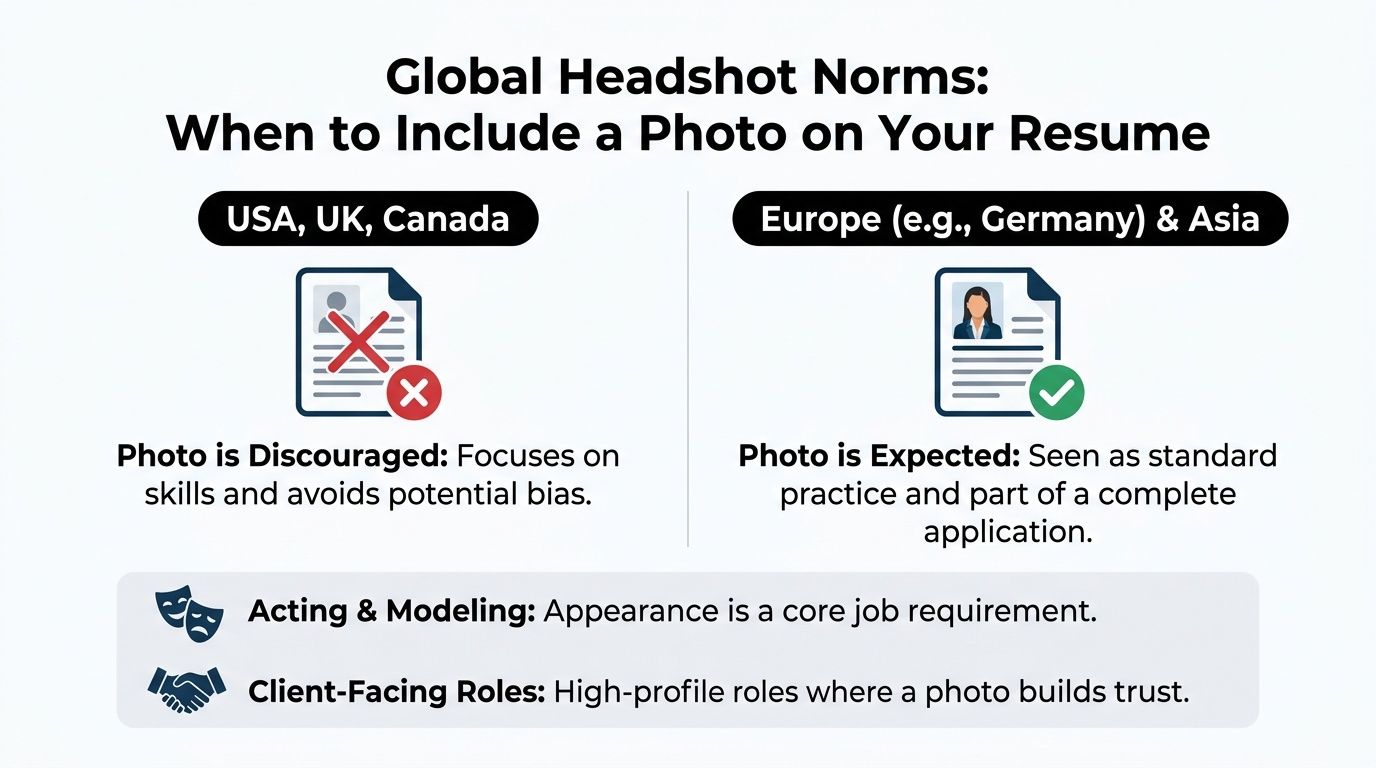
The takeaway here is simple: while resume rules can be local, your online brand is global. Consistency is key.
Avoiding the Outdated Photo Pitfall
An outdated photo is more than a small oversight—it can actively erode trust. One report found that over 56% of professionals have met someone in person who looked significantly different from their online photo. That kind of disconnect makes the first real-life meeting feel awkward, even a bit dishonest. It’s a surprisingly common issue, as statistics show that 42% of professionals never update their profile image. You can discover more insights about why updated photos matter on Brettelizabeth.ca.
A great personal brand is built on authenticity and consistency. Your headshot should be an accurate, current representation of the professional you are today, not who you were five years ago.
This is exactly where modern AI tools can solve a major branding headache. They give you the power to generate a whole suite of on-brand images with different outfits, styles, and backgrounds. This ensures your visual identity is polished, cohesive, and—most importantly—current across every single platform where you’re building your career.
Defining a Truly Professional Headshot
Let's be honest: not every photo of you is a headshot. That picture from your cousin's wedding or the selfie you snapped on a good hair day just won't cut it when your career is on the line. A real professional headshot is a strategic tool. It’s carefully crafted to send a clear message: you are competent, confident, and someone people want to work with.
Think of it this way: a blurry, poorly-cropped photo is the digital equivalent of showing up to a job interview in sweatpants. It immediately signals that you aren't taking the opportunity seriously. A sharp, well-lit portrait, on the other hand, shows you’ve invested in your professional image and are ready for the role.
The Key Ingredients of a Winning Headshot
A great headshot isn't just about having a nice camera. It's about getting four key elements to work together perfectly. Nailing these is the difference between a photo that helps you and one that holds you back.
Lighting: Good lighting is everything. The goal is to get soft, flattering light that eliminates harsh shadows across your face. Professional photographers are masters at this, using specific setups to make sure you look clear and approachable. Bad lighting—like the kind that casts weird shadows from an overhead fixture or direct sun—is distracting and can completely change your expression for the worse.
Background: The background should support you, not compete with you. Keep it simple. A solid, neutral color like gray or a softly blurred office setting works wonders because it keeps the focus entirely on you. A cluttered background, whether it's your kitchen or a busy street, just pulls the viewer's attention away from the most important subject.
Attire: What you wear should reflect your industry and the jobs you’re aiming for. If you're in a corporate field, business casual is a safe bet—think blazers, button-downs, or simple blouses. For more creative industries, you can show a bit more personality. Just steer clear of loud patterns or anything so casual that it undermines your professional credibility.
Your headshot isn’t a costume. The goal is to hint at your professional world, not wear a literal uniform. Your attire should feel authentic to you and the roles you can genuinely fill, helping recruiters envision you in their organization.
- Expression: This is where you connect with the viewer. You want to look both confident and approachable, and a genuine, subtle smile is almost always the perfect way to do it. It radiates warmth and personality. A forced, cheesy grin or a dead-serious stare can come across as unnatural or even intimidating.
When all these pieces come together, you get more than just a picture. You get a powerful first impression that ensures your headshots and resume are perfectly aligned, telling a consistent and compelling story about who you are as a professional.
How AI Is Making Professional Headshots Accessible
Let’s be honest: getting a great professional headshot used to be a real headache. You had to find the right photographer, shell out a good chunk of cash, and then spend hours coordinating a studio session. For most of us, it was a barrier that kept our professional profiles looking a little dated.
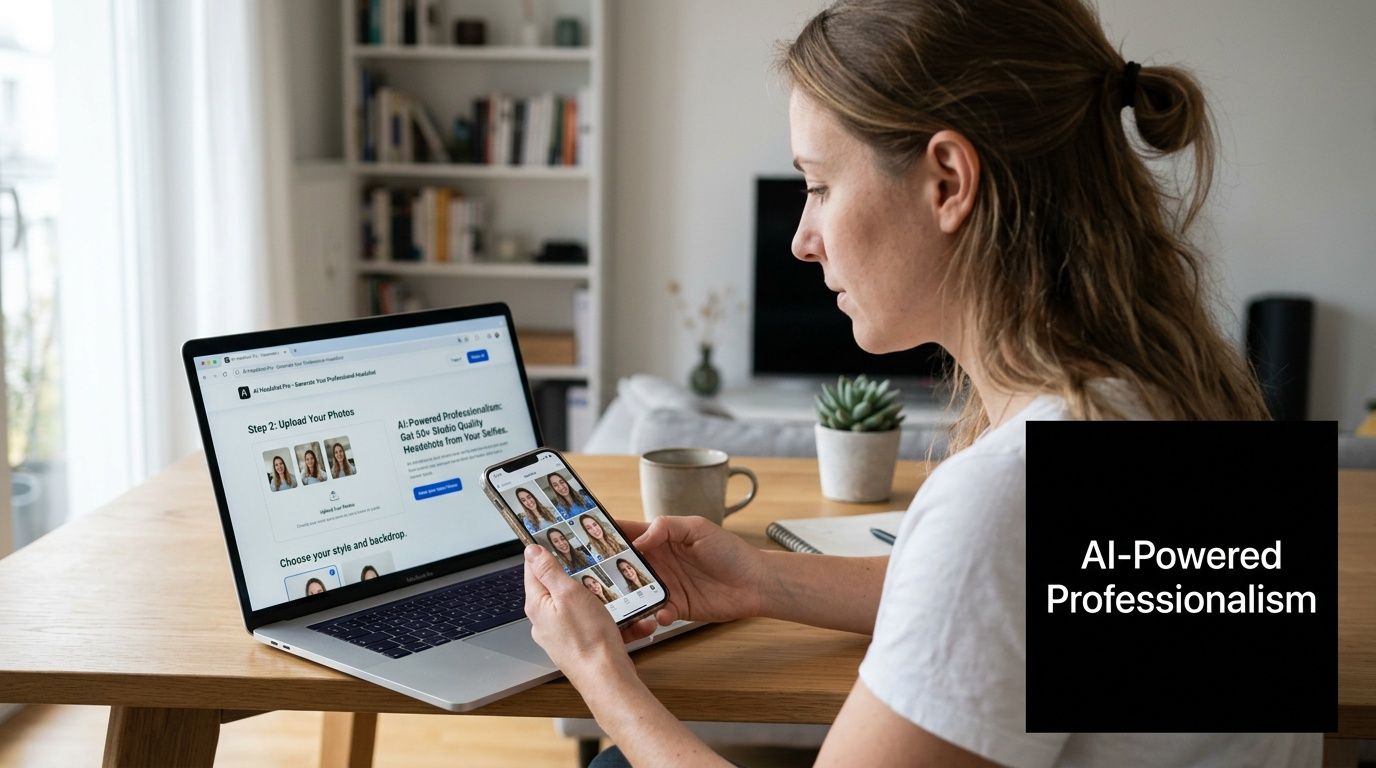
But that's all starting to change. AI-powered platforms are completely rewriting the rules, taking the cost, time, and hassle out of the equation. Now, you can get a studio-quality photo for your LinkedIn profile or company bio without ever leaving your desk.
A Simple Path to a Polished Image
The entire process is built for speed and simplicity. You don't need a fancy camera or any photography skills whatsoever.
- Upload Casual Photos: Just grab a handful of clear, recent selfies or photos you already have on your phone.
- Choose Your Style: Pick from a massive library of professional styles. You can select different outfits, backgrounds, and lighting to match your industry and brand.
- Generate Your Headshots: The AI gets to work, and in minutes, you have hundreds of high-quality options to choose from and download.
This isn't just about convenience; it's about having options. Instead of one or two good shots, you get a whole portfolio of images, giving you the flexibility to keep your brand looking fresh across different platforms. Using a good AI headshot generator gives you a serious leg up, making sure your professional image is always on point.
AI isn’t just a tool; it’s a strategic advantage for anyone looking to elevate their personal brand. It democratizes access to high-quality visuals, leveling the playing field for job seekers and seasoned professionals alike.
Ultimately, this technology gives you complete control over your professional story. With its speed, affordability, and incredible variety, AI ensures you always have the perfect image for every situation, from your strategy for headshots and resumes to your day-to-day online presence.
Common Questions About Headshots and Resumes
Deciding where and when to use a professional headshot can be confusing. Let's clear up some of the most common questions people have when building their resumes and online profiles.
Should I Just Link to My LinkedIn Profile on My Resume?
In short, yes. For applications in the US, UK, and Canada, this is the standard—and for good reason. Popping your unique LinkedIn URL in your resume's contact section is the perfect solution.
This approach lets recruiters see your professional photo in the right context, after they’ve already reviewed your qualifications. It sidesteps any potential for bias during that initial screening. Just be sure your LinkedIn profile is polished, current, and showcases a great headshot.
What if an Online Application Requires a Photo Upload?
This is where you have to use your judgment. If an application system has a mandatory field for a photo, you don’t have much choice but to upload one. That said, this is becoming far less common for corporate jobs in North America.
If the photo upload is optional, think about the situation:
- For creative or client-facing roles, a professional photo can actually help you stand out.
- If you're applying for jobs in a region where resume photos are the norm (like Germany), you should definitely include one.
- For most traditional corporate roles in the US, you're perfectly fine leaving an optional photo field blank.
Think of your headshot as a strategic part of your professional brand. Use it where it helps build a connection, but keep it out of the picture when the focus needs to be squarely on your skills and experience.
How Often Should I Update My Professional Headshot?
A good rule of thumb is to refresh your headshot every two to three years. You'll also want to get a new one anytime your appearance changes significantly—think a new hairstyle, different hair color, or updated glasses.
An up-to-date photo is all about recognition and trust. It ensures there’s no awkward moment when you meet someone for an interview and they can't quite place you. You want them thinking, "Ah, there they are," not, "Wait, who is this?"
Are AI-Generated Headshots Professional Enough for LinkedIn?
Absolutely. Today's best AI headshot platforms are designed to create photorealistic images that are often indistinguishable from those taken in a photo studio. The technology nails the professional lighting, backgrounds, and even the right attire.
For digital platforms like LinkedIn, company websites, or speaker bios, a high-quality AI-generated headshot isn't just "good enough"—it's often a smarter choice. It gives you incredible speed, a wide variety of options, and a full set of consistent, on-brand images you can use everywhere.
Ready to create a professional image that opens doors? With FlowHeadshots, you can generate studio-quality, on-brand headshots in minutes. Get your perfect headshot today at FlowHeadshots.
Enjoyed this article? Share it with your network.
Ready to get your AI headshots?
Professional photos in 60 seconds. No photoshoot required.
Get Started Free